
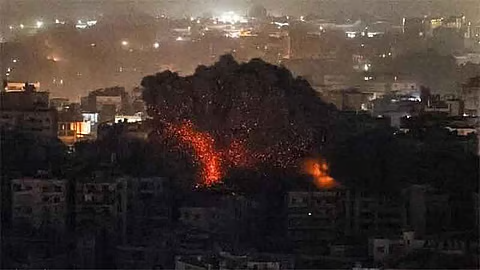
Sri Lanka is now navigating an increasingly complex diplomatic and security situation as the Israel–Iran conflict continues to spill into the Indian Ocean.
Eight days into the crisis, the island nation is dealing with the aftermath of the sinking of an Iranian warship within its Exclusive Economic Zone, managing the custody of another Iranian naval vessel and its crew, and addressing growing economic repercussions ranging from shipping disruptions to export losses.
Here are the latest developments on how Sri Lanka is responding.
Explainer: What is the Strait of Hormuz? How will its closure impact oil prices? Click here to read more
Iran Crew and Vessel Now in Sri Lankan Custody
Sri Lankan authorities have taken custody of the Iranian naval auxiliary vessel IRIS Bushehr and its 208 crew members, following emergency consultations between the government, naval commanders and the Iranian Embassy.
The vessel had been lingering in Sri Lanka’s Exclusive Economic Zone (EEZ) after the sinking of its sister ship IRIS Dena earlier this week.
According to the government:
- 208 Iranian personnel were transferred ashore at Colombo Port
- The crew has been moved to the Welisara Naval Base for medical checks and registration
- The vessel is expected to be escorted to Trincomalee Harbour
Officials say the crew will be treated as non-combatants under international law.
President Anura Kumara Dissanayake said the decision to bring the crew ashore was taken on humanitarian grounds, while ensuring Sri Lanka maintains strict neutrality.
“This is not providing military assistance to any party involved in the conflict,” he said.
Repatriation of Iranian Crew May Take Time
Diplomatic discussions have now begun between Sri Lankan authorities and Iran regarding the fate of the crew and the repatriation process.
Officials say any transfer must comply with the Hague Conventions of 1907 and international maritime law governing neutrality.
Under these rules, a neutral country that receives personnel from a belligerent warship must intern them to prevent their return to hostilities until the conflict ends.
For now, Sri Lanka has indicated that the crew and vessel will remain in state custody until legal and diplomatic procedures are completed.
U.S. Reportedly Pressing Sri Lanka Over Crew Repatriation
The situation has become further complicated by reports of diplomatic pressure from the United States.
According to a Reuters report citing an internal U.S. State Department cable, Washington has urged Sri Lanka not to repatriate the Iranian sailors rescued from the sunken IRIS Dena or the crew of IRIS Bushehr.
The cable reportedly stated that Sri Lankan authorities should limit attempts by Iran to use the sailors for propaganda.
Neither the Sri Lankan government nor the U.S. State Department has publicly commented on the report.
Search Operations Continue for Missing Sailors
Sri Lanka Navy vessels remain deployed south of Galle searching for additional victims from the IRIS Dena disaster.
Authorities say:
- 84 bodies had been recovered as of the latest update
- 32 sailors survived the sinking
- Several others remain missing
Rescue operations are continuing within Sri Lanka’s Search and Rescue Region in the Indian Ocean, with two naval vessels actively engaged in the effort.
Bodies Await Repatriation as Hospital Capacity Strained
The large number of casualties has overwhelmed facilities at Karapitiya Teaching Hospital in Galle, where the bodies of Iranian sailors have been brought ashore.
Several bodies are being preserved in temporary refrigerated units and ice storage containers after the hospital mortuary exceeded its capacity.
Iran has requested the repatriation of the remains, but officials say the process could take time due to the ongoing military situation.
Government Reaffirms Neutral Position
Foreign Minister Vijitha Herath reiterated that Sri Lanka will not support any side involved in the conflict.
Speaking at the Raisina Dialogue in New Delhi, he said Sri Lanka’s actions are guided strictly by international law and humanitarian obligations.
“Sri Lanka does not intend to support any side in this incident and will continue to handle the matter within the framework of international legal obligations,” he said.
Herath also highlighted the strategic importance of the Indian Ocean and called for stronger regional cooperation to ensure maritime stability.
Political Debate Continues at Home
The Iranian vessel episode continues to spark political debate in Sri Lanka.
Opposition Leader Sajith Premadasa and other opposition figures have demanded greater transparency regarding the attack on the Iranian warship and the government’s handling of the aftermath.
Meanwhile, Opposition MP Chamara Sampath Dassanayake alleged in Parliament that the Sri Lankan Navy Commander had verbally invited the Iranian vessels to visit Sri Lanka, an accusation that has not been confirmed by the government.
Despite criticism, some opposition figures have also praised the government for rescuing the crew of the second Iranian vessel, saying the decision helped avert a larger humanitarian disaster.
Tea Industry Faces Major Export Disruptions
The conflict is now beginning to significantly affect Sri Lanka’s export economy.
The Tea Exporters Association warned that disruptions to shipping routes in the Middle East could cost the country between US$10 million and US$15 million per week in lost tea export revenue.
The Middle East accounts for about 52 percent of Sri Lanka’s tea exports, making it the single largest market for Ceylon tea.
Exporters say logistical challenges — rather than weak demand — are preventing shipments from reaching buyers.
Freight costs have surged sharply as insurers withdraw war-risk coverage and shipping companies avoid high-risk routes through the Strait of Hormuz and the Suez Canal.
Shipping Insurance Costs Surge
Global shipping insurance premiums have increased dramatically since the conflict escalated.
War-risk insurance for vessels has reportedly jumped from 0.2 percent of a ship’s value to nearly 1 percent within days.
For a tanker worth US$100 million, the cost of insurance for a single voyage could rise from about US$200,000 to US$1 million, adding substantial costs to global trade.
Industry officials warn these increases could eventually affect the price of imported goods and essential commodities in Sri Lanka.
Government Confident Economy Can Withstand Crisis
Despite these challenges, President Dissanayake has expressed confidence that Sri Lanka’s economy is resilient enough to withstand the fallout from the conflict.
He said recent economic indicators show improvements in fiscal and external balances, including:
- A current account surplus exceeding US$1.8 billion
- A primary fiscal balance above 5 percent
- Stronger government revenues in 2025
The Central Bank has also prepared three economic scenarios — baseline, moderate escalation and worst-case — to guide policy responses.
“We are in a position to withstand this situation,” the President said, noting that authorities are preparing contingency plans for tourism, trade and overseas workers if the crisis deepens.
Situation Remains Highly Sensitive
With Iranian naval personnel now under Sri Lankan custody, search operations continuing at sea and global shipping routes under strain, Sri Lanka finds itself at the center of a widening geopolitical crisis in the Indian Ocean.
Authorities say their priority remains maintaining neutrality while fulfilling humanitarian obligations and protecting the country’s economic interests.
Situation Remains Highly Fluid
With naval incidents unfolding near Sri Lanka, rising geopolitical tensions and economic repercussions beginning to surface, authorities say the situation remains highly sensitive.
The government has reiterated that Sri Lanka will maintain neutrality, fulfil its international maritime obligations, and provide humanitarian assistance where necessary while avoiding involvement in the wider conflict.
Further updates will be added as the situation evolves.