The Managing Director of the International Monetary Fund, Kristalina Georgieva, is expected to visit Sri Lanka soon for what could be decisive talks on the country’s economic future, former minister Ravi Karunanayake has said.
Speaking at a media briefing in Colombo, Mr Karunanayake said discussions during the visit would focus on Sri Lanka’s medium-term recovery strategy and its looming debt obligations.
He credited former President Ranil Wickremesinghe with taking “correct and courageous decisions” during the height of the economic crisis, arguing that those measures had helped stabilise the country.
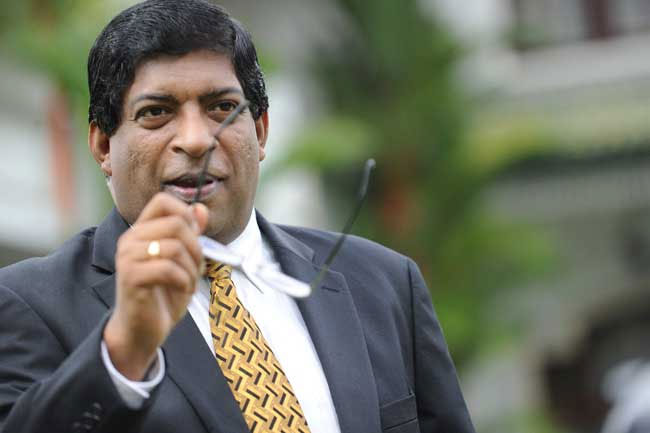
“While the country has gained a degree of economic strength, we must now focus on how we intend to begin repaying debt from 2028,” he said. “Capital expenditure is currently stalled. Without adequate foreign reserves, there is no real capacity to borrow. Even though reserves rose sharply in 2025, the true picture must be clearly explained to the public.”
Mr Karunanayake also questioned whether easing import restrictions — particularly through the large-scale opening of Letters of Credit (LCs) for vehicle imports — was prudent at a time of fragile recovery. Such moves, he warned, could place renewed pressure on foreign reserves.
Instead, he urged the government to adopt a forward-looking strategy centred on boosting domestic agriculture to curb import costs and strengthen economic resilience.
Reflecting on Mr Wickremesinghe’s leadership, he said the former president had prioritised economic stability over political gain, working to protect the Sri Lankan rupee even at the cost of his own political future.
Turning to opposition politics, Mr Karunanayake called for unity between the United National Party (UNP) and the Samagi Jana Balawegaya (SJB). He argued that divisions within the opposition had weakened its electoral prospects and urged party members to set aside internal rivalries.
Sri Lanka’s inflationary pressures continue to weigh heavily on households, he said, with purchasing power yet to recover meaningfully.
He also raised concerns over national security and governance, insisting that the government’s responsibility extended beyond designated high-security zones to the protection of all citizens. Provincial council elections, long delayed, should be held without further postponement, he added.
Mr Karunanayake’s remarks come as Sri Lanka navigates a delicate recovery following its worst economic crisis in decades, with international lenders and domestic political dynamics shaping the path ahead.