Colombo – The Ceylon Teachers’ Union (CTU) has accused the Sri Lankan government of implementing major education reforms without presenting any official documentation or a clear policy framework, warning that even next year such documents may not be submitted.
CTU General Secretary Joseph Stalin told the media that the reforms currently being carried out are not a new initiative of the National People’s Power (NPP) government, but rather a continuation of a proposal first introduced in 2019 under former President Gotabaya Rajapaksa’s administration by then Education Ministry Secretary Dr. Upali Sedara.
According to Stalin, the current reforms are inconsistent with the NPP’s stated education policies, and there has been no official report or draft plan released to the public.
He further noted that the Prime Minister, who also serves as the Minister of Education, has visited all nine provinces merely to deliver presentations on the reforms, with no discussions or consultations held with teachers, unions, or education experts.
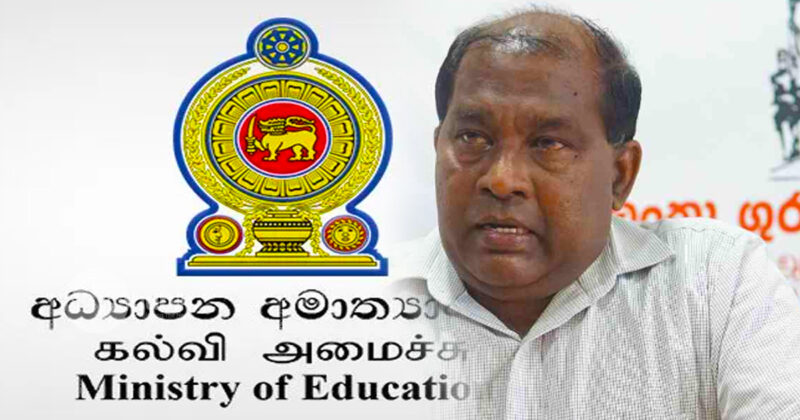
“Conducting presentations without any dialogue or consultation has no real meaning,” Stalin said, stressing that public consultation and pilot projects are essential before introducing structural reforms to the education sector.
He recalled that during the 1997 primary education reforms, a pilot project was first conducted in the Gampaha District, and after assessing its results, the program was extended nationwide.
“No such pilot project has been carried out for the current reforms,” he alleged.
The CTU General Secretary also raised concerns about the introduction of a new concept called ‘modules’, claiming that no testing or evaluation has been done to determine how it would affect the education system.
“Testing new systems while implementing them is dangerous,” Stalin warned. “If this approach fails, it will be the students — the children receiving education during this period — who will suffer the most.”