

Sri Lanka Tourism: Moving Towards Resilient Recovery


Professor in Tourism Economics
University of Colombo
Email: drsuranga3@gmail.com
The Easter Sunday Attacks, the COVID-19 Pandemic, and a Severe Economic Crisis have had a serious negative impact on Sri Lanka’s tourism industry, making it the most vulnerable and severely affected sector in the country’s economy.
However, despite these challenges, Sri Lanka Tourism has shown its remarkable resilience. It has demonstrated its potential to contribute significantly to the country’s economic growth and development, particularly in terms of generating foreign exchange earnings (Suranga Silva, 2022).
Chart 1: Top ten source markets and Purpose of Visits to Sri Lanka, May 2023

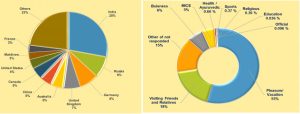
- The revenues for the first five months were $827.8 million US dollars, 4% up from 634.6 million US dollars in the same period in 2022.
- The total tourist arrivals for the first five months of 2023 were 524,486 tourists.
- Sri Lanka Tourism could attract tourist arrivals surpassing 719,978 at the end of December 2022.
- In May 2023, the number of foreign tourist arrivals rose by 8% year-on-year, reaching 83,309 visitors.
Tourism and Biodiversity: No Guilt Trips Being Responsible Travelers


According to the International Union for Conservation of Nature (IUCN), the degree of biodiversity in the world is declining. It is highlighted that more than 150,300 species are on the IUCN Red List. Among these, more than 42,100 species threatened with extinction, including 41% of amphibians, 37% of sharks and rays, 36% of reef building corals, 34% of conifers, 27% of mammals and 13% of birds (https://www.iucnredlist.org/about/background-history).

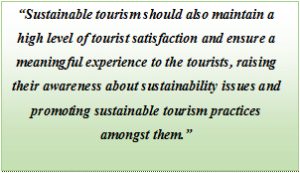
Biodiversity is decisive for tourism development as it decides the total tourist attractiveness of destinations, which can provide manifold opportunities for creating various recreational activities, memorable experiences and the services with educational attractiveness. The preservation and sustainable management of biodiversity are essential for maintaining the appeal and long-term viability of tourism destinations.
The consequences of biodiversity damage create adverse effects on visitors, tourism, and the overall economy. It is essential for tourism operations to depart from conventional practices and establish a synergetic relationship between tourism and biodiversity. Tourism operations must shift from self-centered profit maximizing business operations to mutually supportive interaction between tourism and biodiversity.
Climate Changes on Tourism Development
Changing weather patterns, rising sea levels, coastal erosion and so on due to climate changes have a significant negative impact on tourism development in multiple ways:
Climate Change and Emerging Tourism Demand Trends
| Declining Demand for Tourism | Climate change alters ecosystems and natural landscapes, affecting biodiversity and wildlife populations, which can severely impact on the attraction of tourists, more specifically for eco and nature-based tourism activities. |
| Shifting the Seasonality: | Climate change can disrupt the prevailing tourism growth and development patterns due to the changing weather patterns |
| Reducing Net Economic Benefits of Tourism: | Climate change can decrease tourism revenue due to reduced visitor numbers, cancellations, and increased costs for adapting to climate change impacts. |
Climate change affects to create new trends in tourism demand and tourist behaviors. It is directly affected to change tourists’ destination preferences, seasonal variations, changing interests on specific tourist attractions and travel characteristics, and tourists’ risk perception while increasing demand for sustainability practices of the industry. The highlighted tourism demand characteristics can be listed as:
- Growing concern of the impact of changing climate patterns on travels.
- Increasing focus on sustainable and environmentally friendly practices in the tourism industry.
- Rising demand for eco- and nature tourism, promoting responsible traveling and supporting local community wellbeing.
- Increasing preference for destinations that prioritize conservation efforts and reduce carbon emissions.
- Shifting the demand towards low-carbon transportation methods and use of environmentally friendly inputs.
- Emerging demand for eco-friendly accommodations and hotels with sustainable practices.
- Increasing demand for the destinations adapting with changing climate by strategically diversifying attractions and experiences.
- Increasing requirement for education and awareness about climate change and sustainability during travel experiences.
Transforming Sri Lanka Tourism for Climate Resilience and Adaptation:
Sri Lanka has been identified as one of the 34th biodiversity hotspots in the world and also as the highest biodiversity per unit area of land amongst Asian countries (https://www.ips.lk/talkingeconomics/).
Ensuring Climate Resilience and Adaptation is not only to be the consideration on environmental impact but also a strategic move to ensure the long-term viability of sustainable tourism development in Sri Lanka. As global tourists become more conscious of sustainability matters with their growing demand for low carbon and eco-friendly travel characteristics.
By reducing possible negative impact of climate changes, tourism businesses can attract these environmentally-conscious travelers by gaining the competitive edge in the region while contributing to the overall sustainability goals of the industry.
Sri Lanka Tourism: Building Back Better (BBB)
Developing the resilient and sustainable tourism of Sri Lanka against the possible negative impact of climate change is critically decisive for Sri Lanka Tourism to be more competitive and attractive destination in the region.

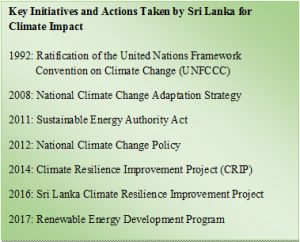
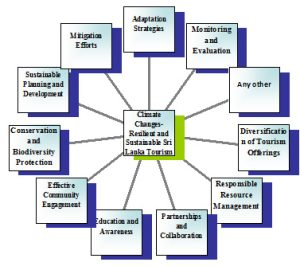
Several effective measures for Resilient and Sustainable Sri Lanka Tourism against the possible impact of climate change can be highlighted.
- Adaptation Strategies: Develop and implement adaptation strategies that can successfully address the specific climate risks faced by different destinations in Sri Lanka Tourism. This may include measures such as improved infrastructure resilience, coastal protection, and the other natural resource management.
- Mitigation Efforts: Reduce greenhouse gas emissions associated with tourism activities by promoting energy-efficient practices, encouraging the use of renewable energy sources and adopting sustainable facility development options.
- Sustainable Planning and Development: Integrate climate considerations into tourism planning and development processes. This should involve assessing vulnerability to climate change, identifying sustainable tourism practices, and incorporating them into destination development and management plans of Sri Lanka Tourism.
- Conservation and Biodiversity Protection: Protect and preserve natural resources, ecosystems, and biodiversity through conservation efforts. This should ensure of promoting responsible tourism practices that minimize environmental impacts and supporting local conservation initiatives.
- Effective Community Engagement: Ensuring all possible means to effectively engage local communities in tourism decision-making processes and distributing fair benefits to them from tourism activities are to be fundamental to alleviate the possible negative impact of climate change on tourism industry in Sri Lanka.
- Education and Awareness: Raising the right awareness among tourists, industry stakeholders, and local communities about the importance of sustainable tourism practices against the impacts of climate change is fundamental and decisive for the resilient and sustainable Sri Lanka Tourism. The University of Colombo is to introduce to a Unit for Sustainable Tourism (UST) as the pioneering higher education institute in Sri Lanka to promote education programs that highlight environmentally responsible behaviors of tourism stakeholders and encourage them to adhere with sustainable choices.
- Partnerships and Collaboration: Foster collaboration among tourism stakeholders, governments, NGOs, and local communities to develop joint initiatives and strategies for resilient and sustainable tourism. This should include sharing best practices, knowledge, and resources to enhance resilience and mitigate climate impacts.
- Responsible Resource Management: Implement efficient water management practices, including conservation, recycling, and wastewater treatment. to minimize pollution and environmental degradation.
- Diversification of Tourism Offerings: Encourage the diversification of tourism products and experiences to reduce dependence on climate-sensitive activities. Such activities should promote climate impact resilient tourism development such as cultural tourism, community tourism, nature-based tourism, wellness tourism and so on.
- Monitoring and Evaluation: Establish monitoring and evaluation systems to assess the effectiveness of sustainable tourism measures and identify areas for improvement. Regularly review and adapt strategies based on changing climate conditions and emerging best practices.

Finally, both “Doing the Right Things” and “Doing Things Right” are indispensably importance for a great success of climate actions for resilient and sustainable tourism development in Sri Lanka.