The bombs fell on Tehran on Saturday morning. By Sunday, the Gulf was on fire, oil markets were bracing for a shock, and analysts from Washington to Beijing were asking the same question: what happens if no one blinks?
This is not a report on what has happened. It is an examination of what comes next — across every dimension of human life that this war is now touching.
I. The Energy Time Bomb: The Strait of Hormuz
Before anything else — before the diplomacy, before the humanitarian toll, before the question of regime change in Tehran — there is a narrow strip of blue water 50 kilometres wide at its slenderest point, lying between the coasts of Iran and Oman. Its name is the Strait of Hormuz, and it may be the single most consequential piece of geography on Earth right now.
Approximately 20 million barrels of crude oil passed through the strait every day in 2024, equivalent to nearly 20 per cent of global liquid oil consumption. Through that same chokepoint flows more than a quarter — approximately 27 per cent — of global seaborne oil trade and around 20 per cent of liquefied natural gas destined for the rest of the world. Iran has threatened to close it dozens of times over the decades but never has. Today, the calculus is different.
The most severe scenario is a closure of the Strait of Hormuz. A shutdown would freeze oil exports from Kuwait and Qatar, and restrict exports from Iraq, the UAE, Oman, and Saudi Arabia. Oxford Economics models that such a closure would lift Brent crude prices to $130 per barrel. Inflation could touch 6% in the US, and nearly 4% in the Eurozone. Although central banks might resist raising interest rates, they’d almost certainly choose to delay cuts, derailing hopes of monetary policy easing.
Even without a full closure, markets are already rattled. A protracted war risks disrupting up to 20% of global supply, potentially pushing Brent towards $100 a barrel. Soaring oil prices risk a return to soaring inflation, hurting the global economy.
For now, Iran depends heavily on the strait for its own energy exports, and closing it would anger China — its only major oil customer. But a cornered Iran, facing regime-change rhetoric from Washington, may decide it has nothing left to lose. That calculation is the most frightening variable in global energy markets today.
The countries most exposed are not the ones making the war. Of the oil and gas that passes through Hormuz specifically, Japan sources close to three-quarters of its crude imports through the strait, South Korea around 60 per cent, and India roughly half of its crude oil — three of Asia’s largest economies, none of them parties to this conflict, all deeply vulnerable to disruption flowing from a waterway they have no power to protect or reopen.

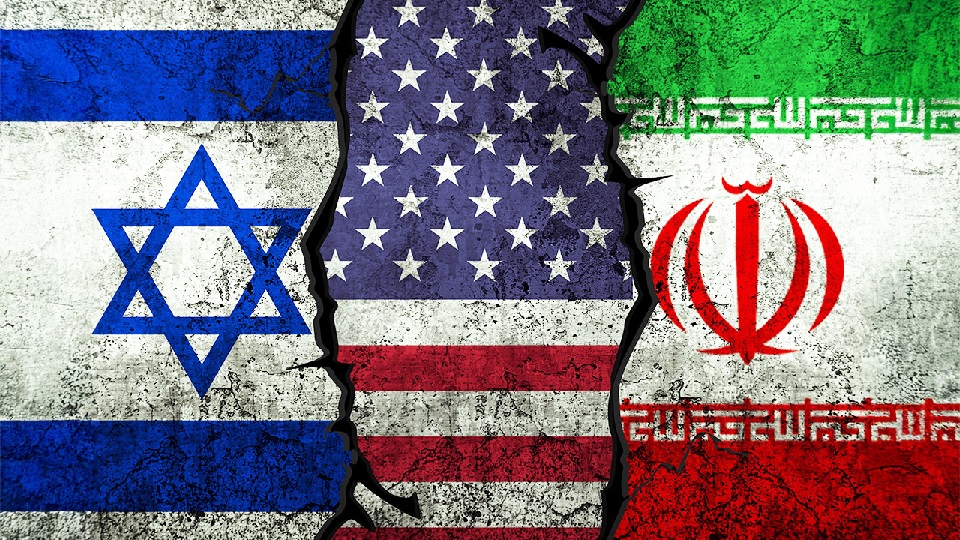
II. The Global Economy: Inflation, Recession, and the Debt Trap
Energy is the first domino. What falls after it is harder to stop.
If Iranian oil exports are lost entirely — whether through strikes on Kharg Island, sanctions enforcement, or blockade — there would be a 4% reduction in global oil supply, with Brent likely settling closer to $90 per barrel. Oxford Economics calculates that global growth would take a notable hit — a 0.2 percentage point downgrade to global GDP — but the real pain would be felt in higher inflation. US inflation could rise to 4.5%, potentially delaying interest rate decreases from the US Federal Reserve.
In the Gulf Arab states — which host some of the world’s fastest-growing non-oil economies — the risks are compounded. Goldman Sachs estimates that a $10 swing in oil prices would move the aggregate GCC budget deficit by around 2 per cent of GDP, requiring cumulative government borrowing of $160 billion. States that have spent years diversifying away from oil — building tourism sectors, attracting foreign investment, developing financial centres — now find those very sectors threatened by the regional instability that war brings.
The shipping industry, already strained by Houthi attacks on Red Sea trade routes, now faces a second front. Rerouting around the Cape of Good Hope adds 10 to 14 days of transit time to Asian destinations and increases fuel costs by approximately 20% per voyage, with war risk insurance premiums adding $2 to $5 per barrel in costs.
For the world’s poorest nations — those that import oil, wheat, and manufactured goods, and whose populations spend the largest share of their incomes on food and fuel — the consequences would be the cruelest of all. A $30 spike in oil prices does not merely inconvenience households in Germany or California. In sub-Saharan Africa, South Asia, and parts of Latin America, it means cooking fuel prices doubling, transport costs surging, and food inflation spiralling into hunger.
III. The Nuclear Shadow: The Most Dangerous Question No One Wants to Ask
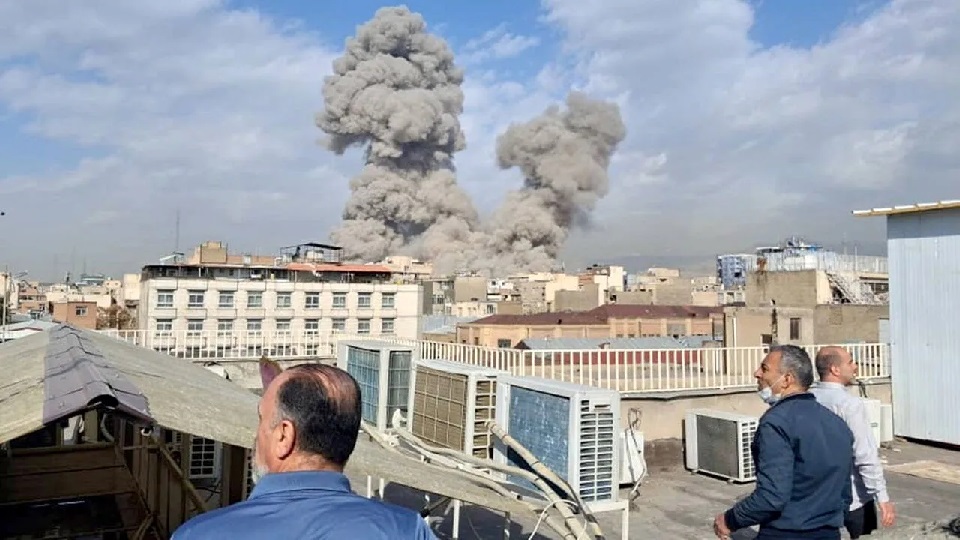
Before Saturday’s strikes, US officials repeatedly claimed — despite being contradicted by their own intelligence agencies and international monitors — that Iran was days away from a nuclear weapon. The IAEA and the US Defense Intelligence Agency had both assessed that Iran’s nuclear program, already degraded by last summer’s strikes, was years from a deliverable weapon.
But the strikes have now created a paradox: they may have made the nuclear threat they were designed to eliminate more likely, not less.
The status of Iran’s weapons-grade fissile stockpiles is undetermined and little movement has been made toward talks, let alone agreement, between Tehran and Washington. Meanwhile, the IAEA will be weakened and probably have less access to Iran’s production and stocks in the aftermath of these strikes. The eyes of the world have been taken off the most dangerous material on Earth.
Chatham House’s experts warn that the lesson other states could draw from this conflict cuts both ways: some may be deterred from nuclear ambitions by seeing what military strikes on a nuclear-aspiring state look like. Others may draw the opposite conclusion — that the only true guarantee of sovereignty against US military action is a nuclear deterrent. Whether that sends a message to other states proliferating is something we need to be careful about.
North Korea, watching closely from Pyongyang, has already sharply accelerated its nuclear and missile program. India and Pakistan’s nuclear rivalry continues to simmer alongside their worsening tensions over Kashmir. The norms against nuclear weapons use — already fraying under Russian rhetoric in Ukraine — are being tested on multiple fronts simultaneously. Moscow’s threats of tactical nuclear use in Ukraine, a lowering of the nuclear threshold, suggested the feasibility of limited nuclear war.

IV. The Region Remade: A Middle East No One Designed
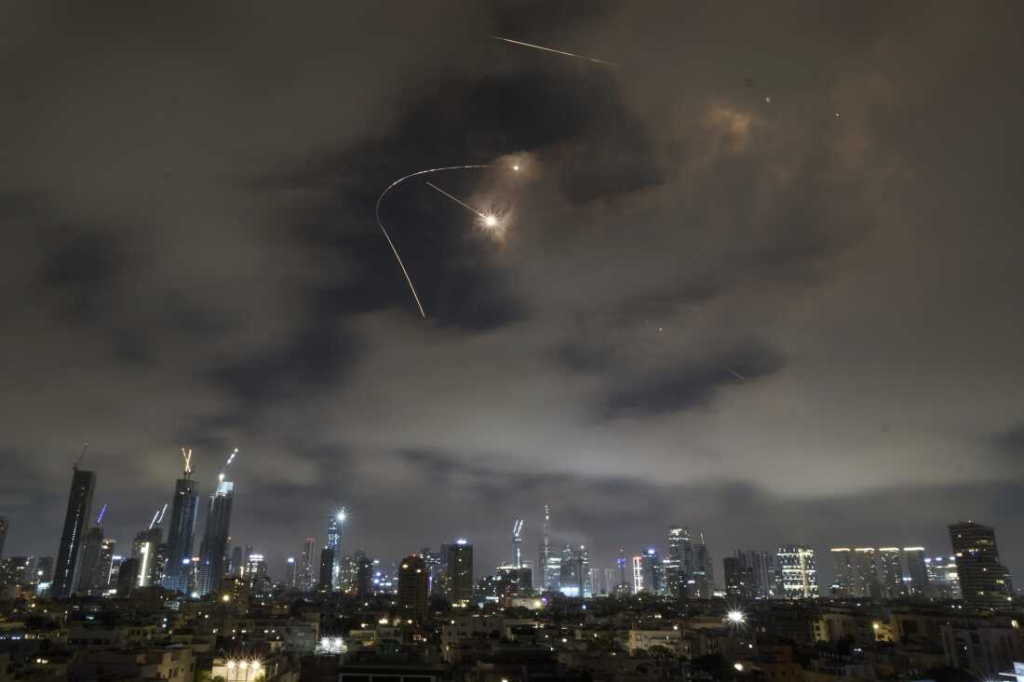
If this war continues for weeks rather than days, the Middle East that emerges will be fundamentally different from the one that existed on Friday.
To understand how this moment arrived, it is necessary to reckon with Iran’s own choices — not merely as a victim of external aggression, but as an active architect of regional tension. For decades, Tehran has funded, trained, and directed proxy forces across the region: Hamas in Gaza, Hezbollah in Lebanon, the Houthis in Yemen, and armed factions in Iraq and Syria. Its nuclear programme — which Tehran consistently described as peaceful — was enriching uranium to 60 per cent purity, a level with no credible civilian justification and just steps from weapons-grade. Iran had stonewalled the IAEA on multiple outstanding safeguards questions and had refused to ratify the Additional Protocol. Whatever the legality and wisdom of the US-Israeli response, the threat that prompted it was not invented from nothing.
That context does not make the bombing of Tehran right. But it is essential to any honest account of how the world arrived here.
Iran’s proxy network — Hamas, Hezbollah, the Houthis, armed groups in Iraq and Syria — has been battered over the past two years. But a continued assault on Iran proper, and especially an attempt at regime change, could unleash unpredictable forces. Collapsing or attempting to collapse a regime is far easier than shaping what follows. External military pressure may weaken a regime, but it does not automatically build a viable alternative. The 2003 Iraq war’s aftermath — a two-decade-long regional destabilisation — offers the closest parallel, and it is not a comforting one.
Even if Supreme Leader Khamenei were gone, Iran’s Islamic Revolutionary Guard Corps are a real military-industrial complex running much of the economy, and one of them could end up in charge. The IRGC did not rise to power through democratic accountability. It would not fall without a fight — from the inside.
The Gulf Arab states that have now been struck by Iranian missiles — Qatar, Kuwait, Bahrain, the UAE, Saudi Arabia — occupy an impossible position. Their territory hosts US military assets. Their populations contain large proportions deeply hostile to Israeli actions and US policies. Iran is trying to make them look complicit with the US in the eyes of their populations. If their governments are seen as willing participants in an assault on a Muslim-majority nation, the internal political consequences could be destabilising.
Turkey, a NATO member, has long sought to position itself as an independent regional power. Pakistan, which shares deep religious and civilisational ties with Iran, has already condemned the strikes. As the body count in Iran rises and images of civilian casualties spread through social media, the public pressure on Muslim-majority governments worldwide to act — or be seen to be acting — will intensify.
The Houthis in Yemen, meanwhile, have already announced they will resume attacks on Red Sea shipping. The maritime corridor through which a significant portion of global trade moves is once again in the crosshairs.
V. The World Order: The Rules No Longer Seem to Apply
Zoom out further still, and what this conflict represents is a stress test of the international order itself.
The strikes were condemned by the United Nations and several uninvolved countries for undermining regional stability. Critics of the strikes also called them illegal under domestic and international law. The US launched “major combat operations” in a sovereign nation without a UN Security Council mandate and without a declaration of war from Congress — on the basis of executive authority that legal scholars across the political spectrum have called constitutionally dubious.
If the world’s most powerful nation can launch multi-day strikes against a sovereign state while nuclear negotiations are still underway — as happened here, with Iran and US diplomats meeting in Muscat just 48 hours before the first bomb fell — then no framework of international law or diplomacy can be considered reliable.
Russia, watching from Moscow, has been quick to condemn the strikes while noting the precedent: a major power launching a preemptive assault based on disputed threat assessments, in defiance of international consensus. China has called for de-escalation while quietly scrambling to secure oil alternatives, deeply invested in Iranian crude that now flows into uncertainty. Neither Beijing nor Moscow is likely to provide Iran with direct military support — analysts do not expect either to provide significant defence or security support — but both will use this moment to erode US credibility in the global south and accelerate efforts to build alternative international systems less dependent on Washington’s goodwill.
Traditional norms on nonaggression are rapidly degrading. The past two years have seen state actors strike civilian infrastructure in multiple capital cities — from Kyiv to Khartoum to Beirut. The world is not becoming more rule-governed. It is becoming less.
VI. The Human Cost: What War Does to People
Beneath all the geopolitics and economics, there are people. In Tehran, families are sheltering in basements. In Haifa, air raid sirens are wailing. In Doha, residents are watching smoke rise over a city that did not choose this conflict. In rural Iran, the conflict has already cost Iran an estimated $17.8 billion in damages, and every rupture of infrastructure — every power grid, every hospital, every road that takes a bomb — translates into suffering for ordinary Iranians who had no say in their government’s nuclear programme or its regional ambitions.
Iran’s population has already lived through two years of economic collapse, mass protests met with violent repression, and the psychological weight of sanctions and isolation. According to Human Rights Watch and the human rights group HRANA, Iran executed over 2,000 people in 2025 — the highest recorded number since the late 1980s — a figure that underscores the depth of repression the Iranian population has already endured before a single bomb fell. Now they live through war.
The Trump administration speaks of freedom for the Iranian people. But as Chatham House analysts and regional scholars have consistently warned, externally imposed regime change rarely delivers the liberation it promises. History — from Kabul to Baghdad to Tripoli — offers a sobering record: the protesters already feel betrayed, and tens of thousands were shot in the wave of demonstrations earlier this year. Ordinary Iranians did not ask to be liberated by cruise missile, and whether they will benefit from what comes next remains deeply uncertain.
VII. Is There a Way Out?
Wars rarely end the way they start. The question that every diplomat, every analyst, every civilian caught in the crossfire is asking tonight is whether there is an off-ramp — and whether anyone with the power to take it is looking for one.
Oman has served as the quiet intermediary between Washington and Tehran for months. It still could. Saudi Arabia has commercial and civilisational reasons to want this conflict stopped. China — Iran’s largest oil customer, a power with economic leverage over both Tehran and Washington — could, in theory, play a mediating role it has never previously played in Middle East conflicts. But none of these paths is open while bombs are still falling and missiles are still flying.
The International Crisis Group, one of the world’s foremost conflict-prevention bodies, noted before these strikes that a window to constrain Iran’s nuclear program through diplomacy had narrowed, even before Israel’s strikes, seemingly because the administration had not worked out red lines in advance.
That window may not be permanently closed. But it is, for now, buried under rubble.
The world has been here before — at the edge of something that could spiral into something no one planned and no one can stop. The difference today is that the spiral has more threads than ever: nuclear weapons, climate-strained economies, fractured international institutions, and a geopolitical order in which the major powers no longer share even the basic assumption that large-scale war is unthinkable.
Whether this war becomes a contained, brutal episode — or the beginning of a decade-long regional catastrophe — depends on decisions that have not yet been made, by leaders in Washington, Tehran, Jerusalem, Riyadh, and Beijing.
The world is watching. And the world is afraid.