

Critical Analysis: U.S. Military Action Against Venezuela
Overview of Events
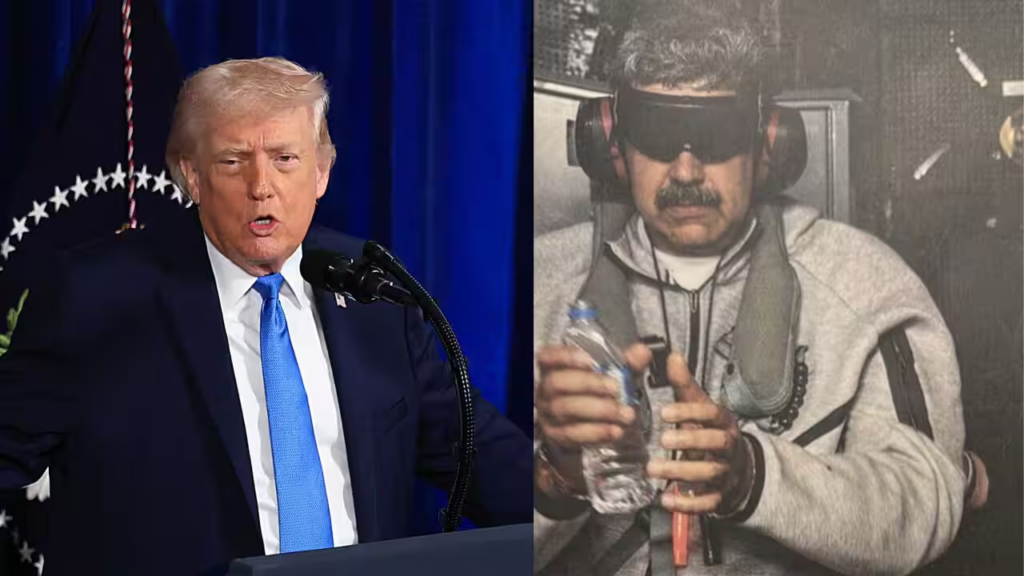
On January 3, 2026, the United States conducted what President Donald Trump described as “one of the most stunning, effective and powerful displays of American military might” against Venezuela. The operation, codenamed “Operation Absolute Resolve,” involved more than 150 aircraft striking multiple targets across northern Venezuela, culminating in the capture and extraction of Venezuelan President Nicolás Maduro and First Lady Cilia Flores. The pair were transported to New York to face narcoterrorism charges.
This operation represents the largest U.S. military intervention in Latin America since the 1989 invasion of Panama and has sparked intense international debate about sovereignty, international law, and the precedent it establishes for future interventions.
Background Context
The U.S.-Venezuela tensions did not emerge overnight. For over two decades, the United States has imposed escalating sanctions on Venezuelan officials and entities. Since 2005, targeted sanctions have been applied to Venezuelan individuals and entities involved in criminal, antidemocratic, or corrupt actions. During the Trump administration’s first term and continuing under President Biden, these measures expanded to include comprehensive financial and sectoral sanctions, particularly targeting Venezuela’s crucial oil industry.
The July 2024 presidential election, which Maduro claimed to have won despite evidence indicating opposition candidate Edmundo González had prevailed, was condemned as fraudulent. González was subsequently forced into exile after being accused of terrorism by Venezuelan authorities. This disputed election became a central justification point for increased U.S. pressure.
In recent months, the Trump administration intensified its campaign through multiple mechanisms: reimposing oil sanctions, seizing Venezuelan oil tankers, conducting dozens of strikes on vessels in the Caribbean allegedly involved in drug smuggling, and implementing tariffs on countries importing Venezuelan oil. The escalation culminated in the January 3 military strike.
U.S. Justifications
The Trump administration has articulated several rationales for its actions:
Narcoterrorism Allegations: The administration frames Maduro’s government as a “narco-terrorist regime” flooding the United States with drugs. Secretary of the Treasury Scott Bessent stated that “Nicolas Maduro and his criminal associates in Venezuela are flooding the United States with drugs that are poisoning the American people”. Maduro was indicted in March 2020 on narcoterrorism conspiracy charges in the Southern District of New York.
Electoral Fraud and Democratic Legitimacy: U.S. officials recognize Edmundo González as the legitimate winner of the 2024 presidential election, arguing Maduro has no democratic mandate to govern.
Human Rights Violations: Venezuela faces an open investigation before the International Criminal Court for crimes against humanity, with documented patterns of extrajudicial killings, arbitrary detention, torture, and enforced disappearances.
National Security: The administration has emphasized control of the Western Hemisphere as a strategic priority, with officials like Stephen Miller asserting historical U.S. interests in Venezuelan oil.
Critical Concerns and Counterarguments
Violation of International Law
Perhaps the most significant criticism centers on the operation’s legality under international law. International law prohibits the use of force as a means of national policy, with force only available in response to an armed attack or possibly to rescue a population under imminent threat of extermination. None of these conditions appear satisfied by the Venezuelan operation.
UN Secretary-General António Guterres stated he was “deeply alarmed” by the action, calling it a “dangerous precedent” and expressing concern “that the rules of international law have not been respected”. The UN Security Council has been convened to address the situation.
International law experts have been unequivocal in their assessment. The operation violates the UN Charter’s prohibition on the use of force against the territorial integrity of sovereign states, with no valid claim of self-defense or UN Security Council authorization.
Constitutional Questions
The Trump administration carried out the strike without the authorization of the U.S. Congress and in violation of limits on the president’s constitutional war powers. Democratic Senator Mark Warner expressed concern about the precedent, asking whether this means “any large country can indict the ruler of a smaller adjacent country and take that person out.”
Questionable Narcoterrorism Claims
While the Trump administration emphasizes drug trafficking as justification, critics note that Trump has framed the pressure campaign as a means of stemming illegal drugs, despite Venezuela exporting virtually none of the administration’s main target, fentanyl. Venezuela’s primary drug exports are cocaine, which originates primarily from Colombia and Peru, raising questions about whether the drug narrative serves primarily as pretext.
The Washington Office on Latin America (WOLA) documented 32 U.S. military attacks and at least 115 deaths in the Caribbean and Eastern Pacific since September 2025, which they characterize as extrajudicial killings, with their evidence-based analysis debunking many administration claims about counter-narcotics operations.
Economic Motivations
Critics have accused Washington of seeking to topple Maduro’s government to take control of the country’s vast oil reserves, which are the largest proven oil reserves in the world. President Trump stated that the United States would “run” Venezuela until there is a transition of power and that U.S. companies would be “very strongly involved” in the Venezuelan oil industry. These statements have reinforced suspicions that resource control, rather than human rights or democracy, drives U.S. policy.
Regional Precedent and Imperial Overreach
Brazilian President Luiz Inácio Lula da Silva stated the action “crossed an unacceptable line” and set a “dangerous precedent,” evoking “the worst moments of interference” in Latin America. The operation has been characterized as a return to “gunboat diplomacy” and U.S. interventionism that dominated much of the 20th century in Latin America, undermining decades of progress toward regional sovereignty and non-intervention norms.
Many regional leaders fear this establishes a precedent where powerful nations can militarily intervene in smaller neighbors based on domestic legal indictments, fundamentally undermining the principle of sovereign equality among nations.
Civilian Casualties and Humanitarian Concerns
The operation involved extensive bombing of populated areas in and around Caracas, including military installations, ports, and infrastructure. The full extent of civilian casualties remains unknown. Satellite imagery showed at least five destroyed warehouses, burned vehicles and a blown-up security post at La Guaira port. Human rights organizations have raised concerns about civilian harm and the protection of vulnerable populations.
Effectiveness of Sanctions-Based Approaches
Years of maximum pressure sanctions have failed to achieve regime change while contributing to Venezuela’s humanitarian crisis. Despite sanctions relief, countries like Cuba, China and Iran continued trading with Venezuela, with China becoming the main source of Venezuela’s petroleum revenue in 2023. This suggests that escalating to military force may not be more effective than economic pressure, which itself proved insufficient.
Accountability for Venezuelan Abuses
The UN Independent International Fact-Finding Mission on Venezuela warned that accountability for long-documented abuses must not be eclipsed by the unfolding crisis, emphasizing that focus should remain on “grave human rights violations and crimes against humanity” committed against Venezuelans. The concern is that U.S. military intervention may allow other Venezuelan officials responsible for repression to escape accountability or use the external threat to justify further crackdowns.
International Response
The international community’s reaction has been deeply divided:
Opposition/Condemnation: Brazil, Mexico, Colombia, Chile, China, Russia, Iran, Cuba, France (Foreign Minister), Spain, and many others condemned the operation as violating international law and Venezuelan sovereignty. China said it was “deeply shocked and strongly condemns the U.S. for recklessly using force against a sovereign state”.
Support: Israel, Argentina, Albania, and Kosovo expressed support for the operation.
Cautious/Mixed: The United Kingdom, EU, Germany, Canada, Australia, and New Zealand called for adherence to international law while expressing concerns about Maduro’s regime. These nations face a dilemma in condemning the violation of international law while acknowledging Maduro’s authoritarianism.
Implications and Questions
Several critical questions emerge from this operation:
- Long-term U.S. Engagement: Trump stated the U.S. would “run” Venezuela until a transition occurs. What does this mean in practice? How long will U.S. involvement last? Who will govern Venezuela, and how will legitimacy be established?
- Regional Stability: Colombia has deployed forces along its border preparing for potential refugee flows. How will neighboring countries manage the fallout? Could this destabilize the broader region?
- Precedent: If the U.S. can conduct regime change through military force based on domestic indictments, what prevents other powerful nations from doing the same? Russia, China, and others have noted this precedent with concern.
- Venezuelan People: While many Venezuelans celebrated Maduro’s removal, others worry about foreign occupation. How will Venezuelan civil society, political prisoners, and the opposition navigate this new reality?
- International Order: This operation represents a fundamental challenge to the post-World War II international legal framework. What are the implications for a rules-based global order?
- Humanitarian Situation: Venezuela already faces a complex humanitarian emergency. Will U.S. control improve or worsen conditions for ordinary Venezuelans?
Conclusion
The U.S. military action against Venezuela on January 3, 2026, represents a watershed moment in international relations and Latin American politics. While the Maduro government’s authoritarianism, electoral fraud, human rights violations, and corruption are well-documented and widely condemned, the method of addressing these abuses through unilateral military intervention raises profound legal, ethical, and practical concerns.
The operation highlights fundamental tensions between different principles: sovereignty versus accountability, regional stability versus democratic values, and international law versus perceived national security interests. Whether viewed as a justified removal of a dictator or an illegal act of aggression depends largely on which principles one prioritizes.
What remains clear is that this action will have lasting consequences for U.S. standing in Latin America, the credibility of international law, and the future of Venezuelan democracy. The success or failure of whatever transition follows will be scrutinized as a test case for interventionist foreign policy in the 21st century.
The international community now faces difficult questions about how to respond to authoritarian regimes that commit systematic human rights violations while maintaining respect for sovereignty and international law—questions that cannot be answered through military force alone.